A federal appeals court heard arguments Tuesday, Oct. 6, on whether a Texas law restricting protests on public college campuses violates the First Amendment. The outcome could affect more than 100,000 students at Lone Star College.
The U.S. Court of Appeals for the 5th Circuit took up the challenge to Senate Bill 2972, the Campus Protection Act, as first reported by The Texas Tribune. The law requires all Texas public colleges, including community colleges like Lone Star College, to adopt policies barring expressive activity on campus between 10 p.m. and 8 a.m. It also prohibits invited speakers, amplified sound and drums during the final two weeks of each semester.
The Texas Legislature passed SB 2972 in 2025 after pro-Palestinian protests swept Texas college campuses. Then-Sen. Brandon Creighton authored the bill in the Texas Senate. Creighton has since left the Senate to become chancellor of the Texas Tech University System. The law took effect Sept. 1, 2025.
A judge blocked the law
Students and student groups at UT-Austin and UT-Dallas filed suit, represented by the Foundation for Individual Rights and Expression (FIRE). The plaintiffs include a Christian fellowship, an independent student newspaper, a percussion group and Young Americans for Liberty.
U.S. District Judge David Alan Ezra sided with the students on Oct. 14, 2025, temporarily blocking the University of Texas System from enforcing the challenged provisions. Ezra applied strict scrutiny, finding the law was content-based, according to FIRE.
"The First Amendment does not have a bedtime of 10:00 p.m.," Ezra wrote in his Oct. 14, 2025, ruling. "The burden is on the government to prove that its actions are narrowly tailored to achieve a compelling governmental interest. It has not done so."
UT System officials appealed. That appeal brought the case to the 5th Circuit on Tuesday.
What each side argues
Texas Solicitor General William Peterson and Assistant Solicitor General Daniel Ortner argue the law does not itself ban student speech after 10 p.m. Instead, they say it directs colleges to write campus policies balancing free speech with preventing disruptions to exams, studying and sleep. They also argue the students lack standing because SB 2972 regulates colleges, not students directly.
The law itself states that "nothing in this section may be construed to limit or infringe on a person's right to freedom of speech or expression protected by the First Amendment."
Lawyers for the students counter that the law leaves colleges little discretion. SB 2972 says schools "shall adopt" the restrictions and requires disciplinary sanctions. UT-Dallas adopted the restrictions nearly word-for-word, according to the Texas Tribune report.
The two sides also disagree on whether the law treats speech differently based on content. Student lawyers say it does because SB 2972 exempts commercial speech, such as selling merchandise or soliciting donations.
What it means for Lone Star College
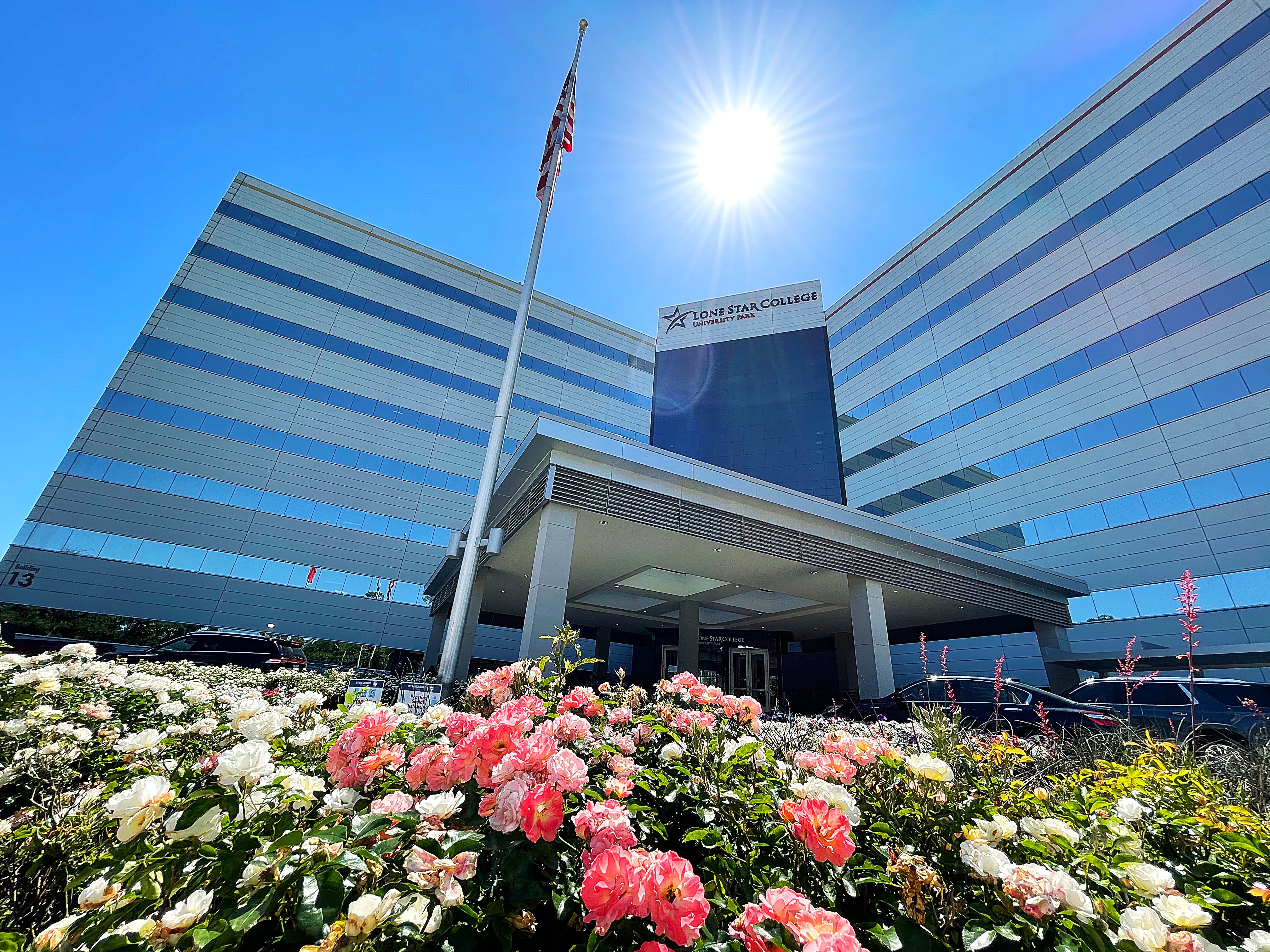
Lone Star College enrolled 100,023 students this fall, a record, across more than 20 locations in the Houston area. As a public college system, LSC falls under SB 2972's mandate.
LSC's Board of Trustees adopted an expressive activity policy on Sept. 5, 2024, before SB 2972 took effect. That policy supports "Viewpoint- and Content-Neutral speech restrictions" and designates public forum areas on campuses. Whether LSC has adopted a separate policy implementing SB 2972's specific overnight and end-of-term restrictions is not clear from public records.
Ezra's preliminary injunction applies only to the UT System. No court order currently shields Lone Star College students from the law's requirements.
The 5th Circuit typically issues rulings weeks to months after oral arguments. No timeline for a decision has been announced.